Klayd
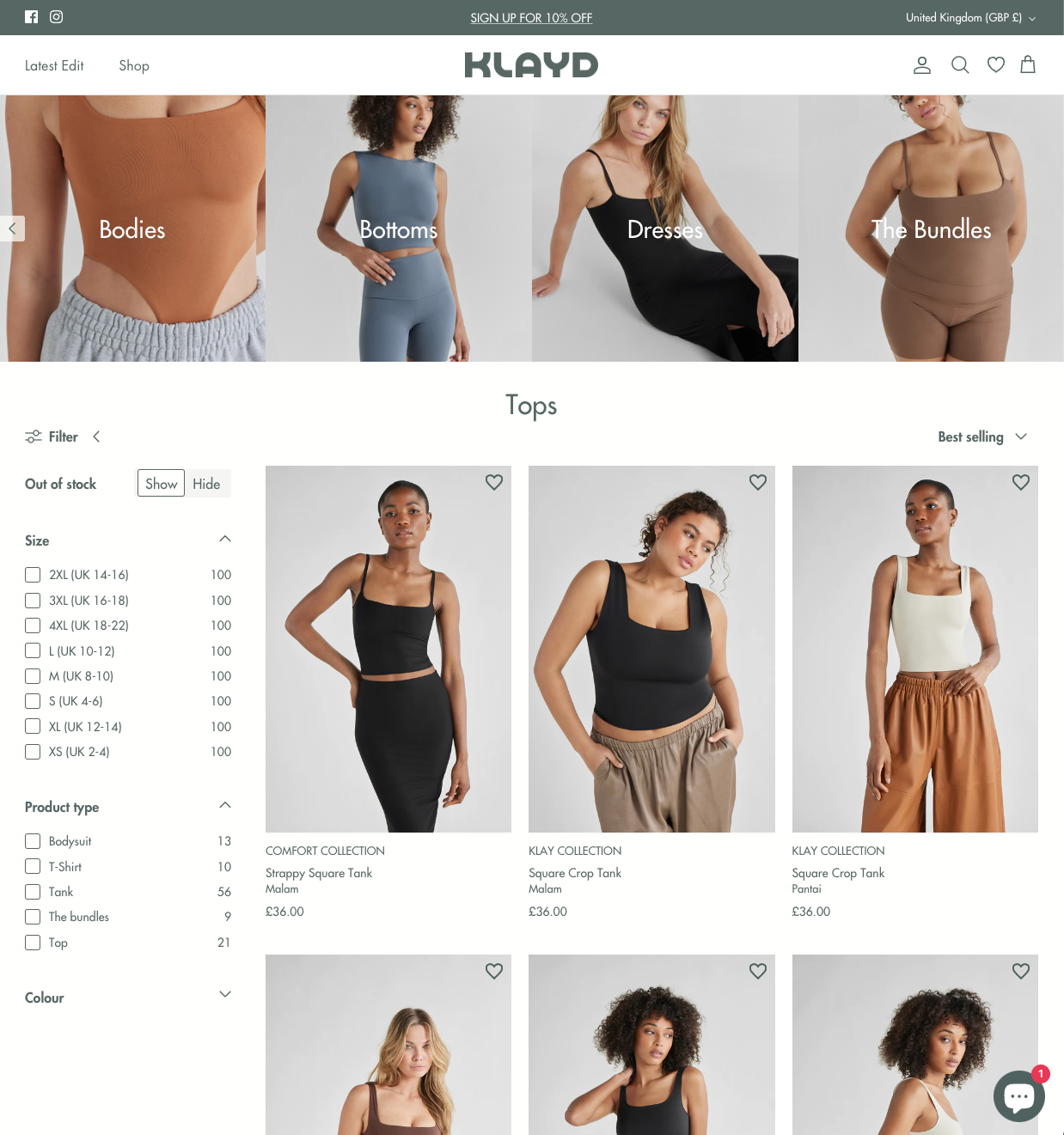
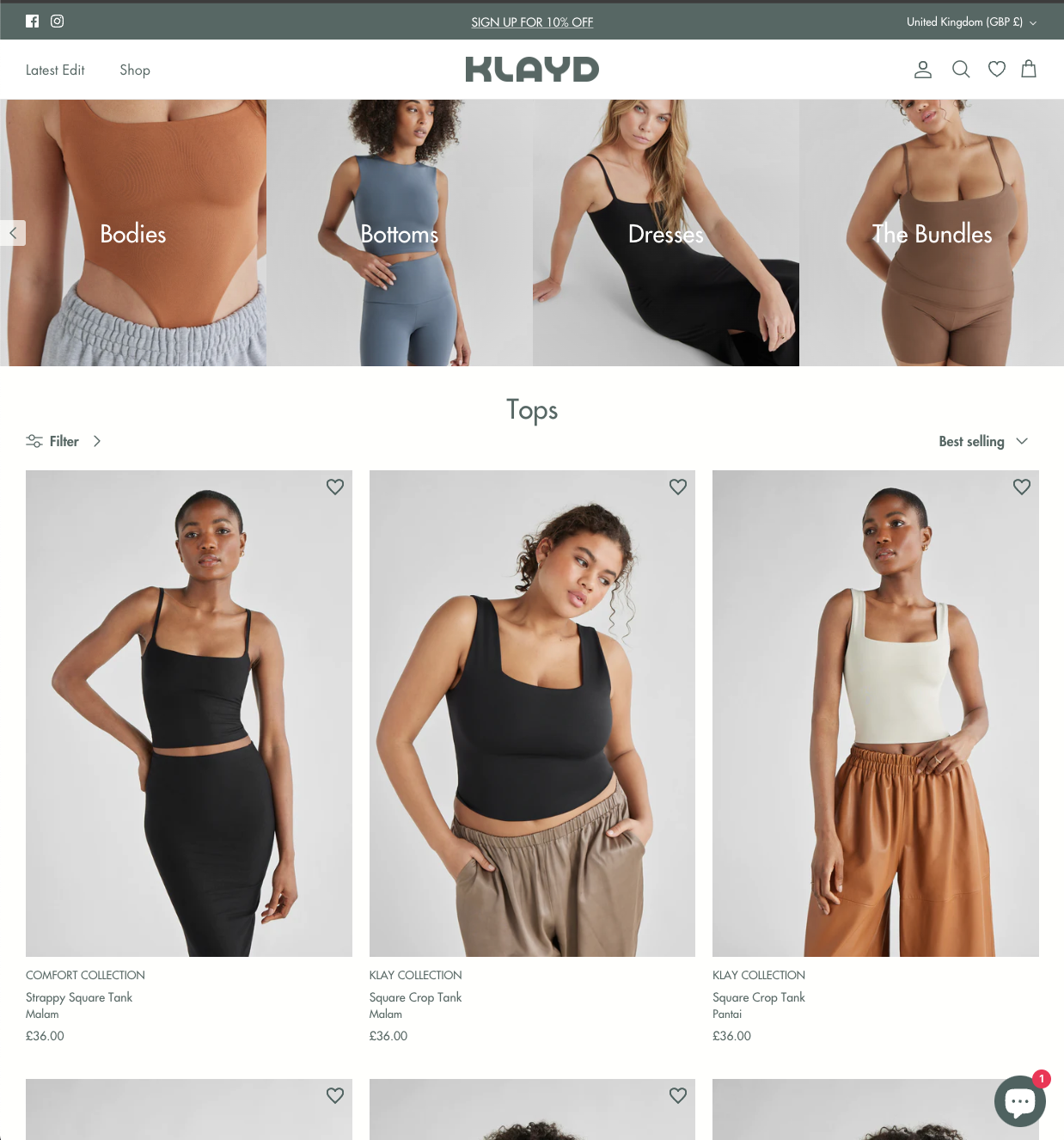
Launched in September 2023, Klayd is an emerging online fashion brand which offers elevated basics and wardrobe staples. The brand promotes inclusive sizing from XS to 4XL and adopts a clear outline of their production methods from responsible fabric choices to inclusive working practices. As principle UX/UI Designer I worked with a cross-functional team in developing the B2C ecommerce website on the Shopify CMS platform.
The Challenge
As a new brand fresh to the UK market, the challenge was to establish exactly who the customer was going to be and successfully communicate the guidelines presented to me, working within the parameters of the Shopify platform. These parameters included:
Brand affinity
Market level
Future Projections
Solution
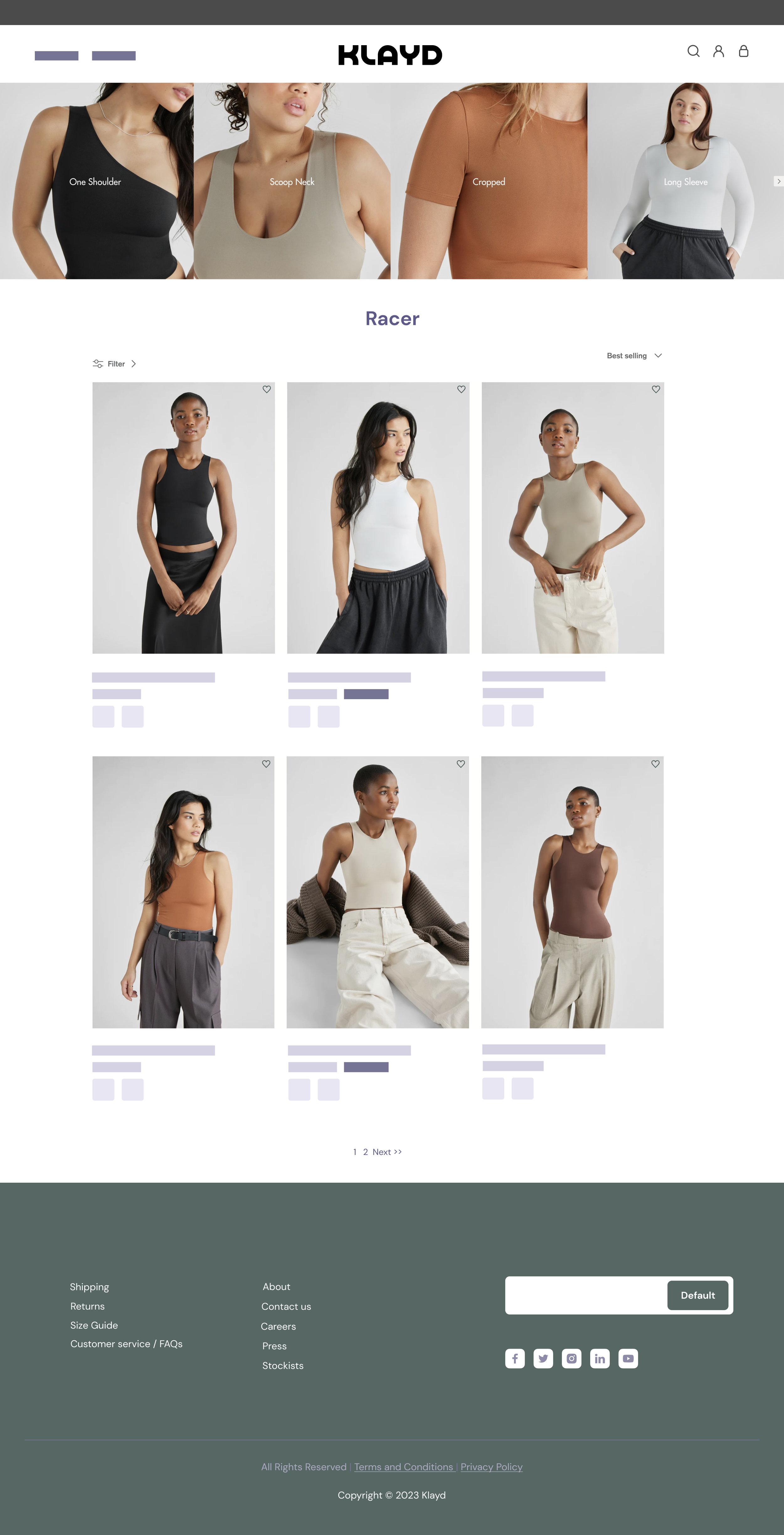
It was essential to look into the growth of the company in order to choose a suitable theme to work from and work within budget. To address the challenge, the team developed proto personas and user friendly flows via a range of UX wireframes
I assumed the following roles designing this storefront:
Conducted extensive research exploring and developing brand affinity.
Mapped out user journeys.
Developed a site map and created Lo-fidelity wireframes based on Shopify template
Ensured all deliverables were ready within client time frame.


Outcomes & Reflections
The project highlighted the importance of aligning platform capabilities, project scope and stakeholder expectations early in the process. While we researched and recommended Shopify themes based on brand and user needs, a deeper exploration of theme limitations, third-party apps and required functionality at the outset would have helped identify constraints earlier and streamline delivery.
Moving quickly from UX into high-fidelity UI also reinforced the value of establishing a stronger visual system before progressing into final designs. More time dedicated to defining typography, components and core UI principles would have created a clearer foundation for the wider site.
Finally, the experience strengthened my approach to stakeholder management. On future projects, I would establish clearer roles, decision-makers and communication points during kick-off, creating greater transparency around ownership and enabling faster, more informed decisions throughout the project.